
Last Updated: October 28, 2026
Quick Summary
It is safe to eat at restaurants with celiac disease when the kitchen truly controls gluten, and risky when it only claims to. The honest answer to is it safe to eat at restaurants with celiac disease is that it depends on the kitchen, not the menu label.
- A gluten-free menu is the starting line, not the finish line.
- Ask about separate prep areas, dedicated fryers, and who handles allergy orders.
- Cross-contact from shared fryers, grills, cutting boards, and sauces is the biggest risk.
- Ask one follow-up question and listen for how staff keep food separate.
- Stop eating the moment you suspect gluten and tell your server.
Table of Contents
- Is It Safe to Eat at Restaurants With Celiac Disease?
- Questions to Ask Restaurants About Gluten-Free Food
- Gluten-Free Restaurant Cross-Contact: What to Watch For
- Your Celiac-Safe Restaurant Checklist
- How to Verify Staff Knowledge and Kitchen Practices
- What to Do After a Suspected Gluten Exposure
- Cuisine-Specific Ordering Tips
- Is It Safe to Eat at Restaurants With Celiac Disease?
- Frequently Asked Questions
Is It Safe to Eat at Restaurants With Celiac Disease?
Eating out with celiac disease is safe when the restaurant truly controls gluten, and risky when it only claims to. The honest answer to "is it safe to eat at restaurants with celiac disease" is: it depends on the kitchen, not the menu label.
Celiac disease is an autoimmune condition where even tiny amounts of gluten can damage the small intestine, so a crumb matters. A "gluten-free menu" is the starting line, not the finish line.
Questions to Ask Restaurants About Gluten-Free Food
Ask about preparation, not just ingredients: a separate prep area, dedicated fryer, how gluten-free bread and pizza are handled, whether sauces contain wheat, and who handles allergy orders. A vague "I think so" is your cue to leave. For a real-world example, see our celiac safe restaurant in Lake Balboa SFV.
Gluten-Free Restaurant Cross-Contact: What to Watch For
Cross-contact is the biggest risk when dining out with celiac disease, gluten touching your food during prep, cooking, or plating, even in tiny amounts. The usual culprits are shared fryers, grills, cutting boards, utensils, sauces, and marinades. Simple dishes are your friend; for a deeper walkthrough, read our guide on how to avoid cross contamination in restaurants.
Your Celiac-Safe Restaurant Checklist
- Check the menu online and call ahead at a quiet time
- Confirm a dedicated prep area, fryer, and grill
- Tell your server you have celiac disease, not just a preference
- Order simple dishes and double-check sauces
- Leave if anything feels off
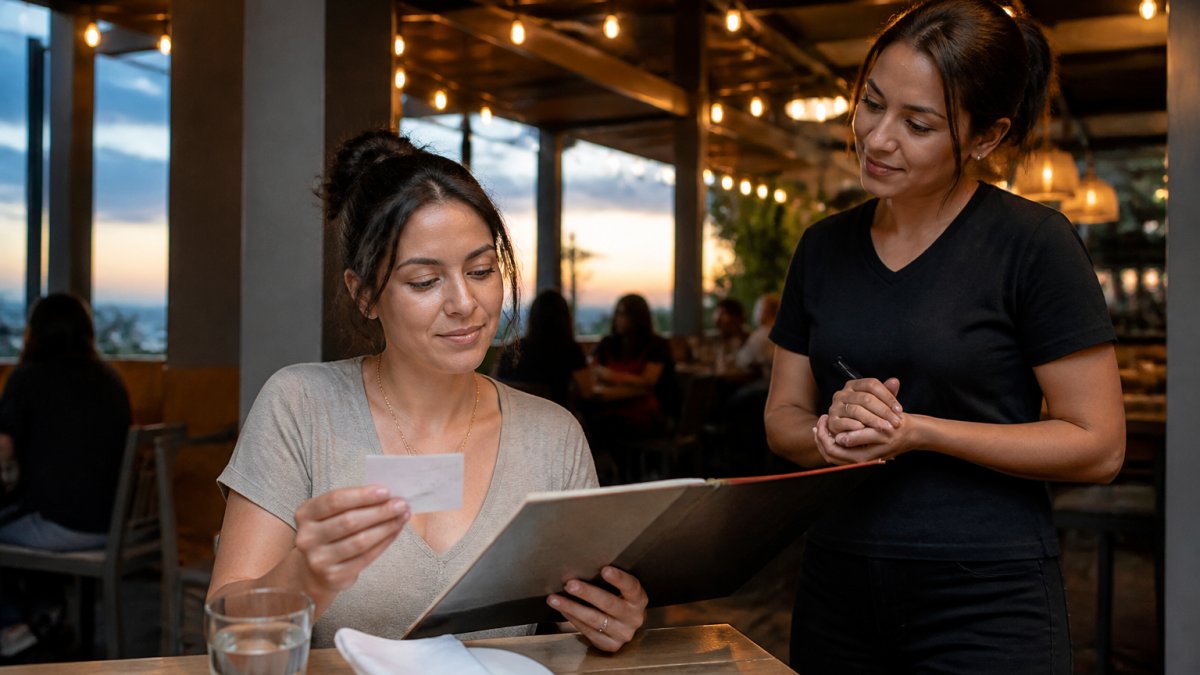
A gluten-free dining card spells out your needs in plain language the kitchen can act on.
How to Verify Staff Knowledge and Kitchen Practices
Ask one follow-up question and listen closely. If staff can explain how they keep food separate, you're in good hands; if they can't, that's your answer. Red flags: "everything is gluten-free" with no explanation, annoyed staff, and no one checking with the kitchen.
What to Do After a Suspected Gluten Exposure
Stop eating the moment you suspect gluten, note what you ate, and tell your server so the kitchen can check. Watch for stomach pain, bloating, diarrhea, fatigue, and headaches, and follow your doctor's guidance. One bad meal is a data point, not a verdict on every restaurant.
Cuisine-Specific Ordering Tips
| Cuisine | Safer Bets | Watch Out For |
|---|---|---|
| Mexican | Corn tortillas, grilled meat, rice, beans | Flour tortillas, shared fryers, some sauces |
| Japanese | Plain sashimi, grilled fish, steamed rice | Soy sauce, tempura, teriyaki |
| Italian | Grilled fish, plain salads, risotto | Pasta water, bread, breaded dishes |
Ask about the fryer, the grill, and the sauces every single time. Cuisine gives you a starting point, not a guarantee.
Is It Safe to Eat at Restaurants With Celiac Disease?
Yes, with the right preparation. The risk isn't the restaurant itself, it's the gap between what a menu promises and what the kitchen actually does. It also helps to understand the difference between 100% gluten-free and gluten-friendly restaurants, and we've rounded up alternatives to non-gluten-free restaurants. For a full step-by-step method, see our guide on how to find celiac safe restaurants.
Our kitchen is 100% vegan and 100% gluten-free, with a dedicated celiac-safe setup.
Frequently Asked Questions
Can people with celiac disease eat at regular restaurants?
Yes, but with caution. Ask specific questions about shared fryers, grills, and cutting boards before ordering. A celiac-safe restaurant checklist can help you ask about procedures.
What questions should I ask a restaurant about gluten-free food?
Ask whether the kitchen has a dedicated gluten-free menu, whether shared fryers or grills are used, and how utensils and cutting boards are handled. Ask if staff are trained on cross-contact and whether sauces, marinades, or seasonings contain wheat, barley, or rye. Request that the server confirm with the chef. A gluten-free dining card for celiac disease can help you cover these points quickly and consistently.
Is it safer to choose a dedicated gluten-free restaurant?
Ask about the kitchen's practices for preventing cross-contact, and check whether it is 100% gluten-free before relying on it.
Dining out with celiac disease shouldn't feel like a gamble. At LeosSuperfood, our 100% vegan and gluten-free menu is prepared in a dedicated celiac-safe kitchen, free from dairy, wheat, and meat. Whether you need a quick grab-and-go lunch or catering for an event, we make safe dining simple. Get started with LeosSuperfood and enjoy food that's as nourishing as it is flavorful.
